149 place 30


Interactions with friends and family may keep us healthy because they boost our immune system and reduce our risk of diseases such as heart disease, stroke and type 2 diabetes, new research suggests. Researchers drew this conclusion after studying proteins from blood samples taken from over 42,000 adults recruited to the UK Biobank.
A newsletter a day!
You may get 10 most important news around midday in daily newsletter. Press the button and we will send you the most important news only, no spam attached.
LIKE us on Facebook so you won't miss the most important news of the day!
 ScienceDaily


An East Bay apartment complex has been bought at a price that's well below its prior value. Read more ›
0
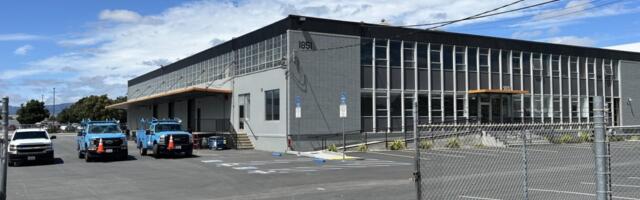
A PG&E Corp. unit has bought a San Jose building in a move to bolster the utility's South Bay operations. Read more ›
0

Europe’s investors eye nuclear startups amid ‘massive scramble’ for sovereign energy Read more ›
0 fresh

Exclusive: British Business Bank eyes stake in EU’s €5bn Scaleup Fund Read more ›
0 fresh


I found the best protein powders that won’t make your morning smoothie taste like drywall. Read more ›
0 newcommer


You can now add Motorola's MA2 wireless Android Auto adapter to your shopping lists for the year-end holidays. Read more ›
0 fresh

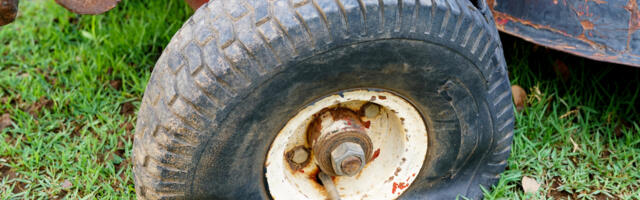
Repairing a tire on a riding mower is similar to repairing one on a car, but there are some differences to be aware of. Here's what you need to know. Read more ›
0 fresh


An anonymous reader quotes a report from MIT Technology Review: [T]he payment company Stripe, founded by brothers Patrick and John Collison, says it will fund a new $500 million nonprofit whose goal is preventing both the common cold and the flu. Its eventual aim is to get rid of respiratory viruses altogether. The new organization, called Intercept, will use grants and investments to back prevention approaches, including vaccines, as well... Read more ›
0 fresh


According to rumors from China, the Redmi Note 17 will be unveiled in July, with the Redmi Note 17 Pro (and a possible Pro+) following in either late July or August. The Redmi Note 17 is allegedly powered by the Snapdragon 6 Gen 5 SoC, and it has a flat screen with "1.5K" resolution, a 50MP main camera, and a 9,000mAh battery. The phone also comes with water resistance, though... Read more ›
0 fresh

![[Перевод] Динамические иконки приложения на Flutter: подробная инструкция для ручного выбора и обновлений по воздуху](https://times42.com/media/6/0/9/12631609_640x200.jpg "[Перевод] Динамические иконки приложения на Flutter: подробная инструкция для ручного выбора и обновлений по воздуху")
Hola, Amigos! На связи Павел Гершевич, Mobile Team Lead агентства продуктовой разработки Amiga. Мы с командой подготовили для вас перевод статьи о том, как можно кастомизировать иконку приложения динамически. Всем приятного чтения! Читать далее Read more ›
0 fresh


Acevedo, Aron, Fisher, and Brown's fMRI study suggests that, for some long-term couples, romantic reward can persist alongside attachment and lower obsession. Read more ›
0 fresh


Meesho Chases Kirana High Meesho’s first acquisition after its IPO appears to be more than a new experiment. By buying… Read more ›
0 fresh

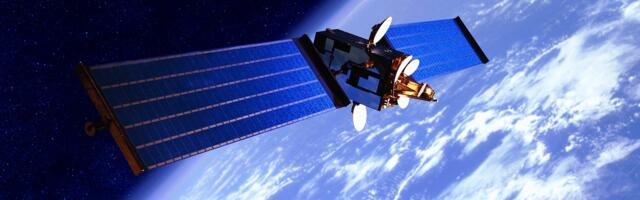
Space-bound data centers promise solar energy and scale as AI demands soar, but latency re-emerges as a major issue. Read more ›
0 fresh


Need some peace and quiet? Here are the best Loop Prime Day deals worth shopping right now. Read more ›
0 fresh


The Steam Deck dominates gaming on the go, and the Steam Machine looks to conquer the living room. Read more ›
0 fresh
ScienceDaily
A major study of more than 112,000 people found that eating foods containing common preservatives may be linked to a higher risk of high blood pressure and heart-related diseases. Researchers tracked participants for up to eight years and discovered that people consuming the highest amounts of certain preservatives had significantly greater risks of hypertension, heart attack, stroke, and other cardiovascular problems. Read more ›
0
A major study of Australian native bees found that stem-nesting species may be the first to feel the impact of climate change. Unlike bees that nest underground, they have few ways to escape dangerous heat. Researchers also discovered that tropical bees are particularly vulnerable, even when they are already adapted to hot environments. The findings suggest bee behavior could be a key factor in determining which species survive a warming... Read more ›
0
A new study from Northern Arizona University is raising red flags about a widely used global emissions database from Climate TRACE, a consortium co-founded by Al Gore. Researchers found that the database may be dramatically undercounting carbon dioxide emissions from cars and trucks in cities—by an average of 70% across 260 U.S. cities, with some cities showing gaps of more than 90%. Read more ›
0
A new theory suggests the universe is constantly recording its own history in the fabric of spacetime. If correct, this cosmic memory could help solve some of the biggest puzzles in physics, from black holes to dark matter and the universe’s ultimate fate. Read more ›
0
Plague was already a deadly killer 5,500 years ago, long before cities, farming, or the rat-infested conditions usually linked to historic outbreaks. By analyzing ancient DNA from hunter-gatherer cemeteries in Siberia, researchers discovered early plague strains in nearly 40% of the individuals studied and found evidence of rapid family-based outbreaks that wiped out many children and young teenagers. Read more ›
0
A historic lack of snow in the Gila River watershed has left Arizona’s San Carlos Reservoir less than 1% full, triggering a massive fish kill and an indefinite closure. Despite the bleak conditions, heavy summer rains could help the reservoir rebound. Read more ›
0
A new study suggests Southern California's major fault system is more stressed than at any point in the last 1,000 years. Researchers found that the Cajon Pass, where the San Andreas and San Jacinto faults meet, could act as an “earthquake gate” that determines whether a future rupture spreads across both faults. Current conditions resemble those that preceded some of the region’s largest historical earthquakes. Read more ›
0
Scientists may have uncovered a hidden trigger behind Alzheimer’s disease. Instead of plaques being the root cause, amyloid beta appears to interfere with tau, a protein that helps keep neurons functioning properly. This disruption could set off the damage that eventually leads to the disease’s most recognizable brain changes. Read more ›
0
The race to build data centers in space is gaining momentum as AI drives unprecedented demand for computing power. Orbital facilities could tap into abundant solar energy and avoid many of the environmental challenges faced on Earth. Yet space remains a harsh and expensive place to operate, with major hurdles including cooling, maintenance, radiation exposure, and orbital debris. Read more ›
0
Astronomers may be closing in on a long-standing cosmic mystery: why some of the universe’s biggest galaxies seem to have far fewer stars than expected. Using NASA- and JAXA-supported XRISM observations of a galaxy called NGC 4151, researchers found strong evidence that supermassive black holes can unleash powerful winds that blow away the raw material needed to make new stars. Read more ›
0
Most popular sources
 EU-Startups
|
0% |
 StartUp Beat
|
0% |
 Tech Wire Asia
|
0% |
 ReadWrite
|
0% |
 ArcticStartup
|
0% |
| View sources » | |
LIKE us on Facebook so you won't miss the most important news of the day!
25.06.2026 00:35
Last update: 00:31 EDT.
News rating updated: 07:31.
What is Times42?
Times42 brings you the most popular news from tech news portals in real-time chart.
Read about us in FAQ section.