

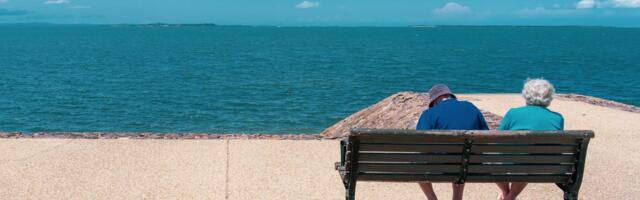
A retirement move can succeed on nearly every term used to justify it. The home may cost less, the weather may be kinder and the days may feel less hurried. A person can be pleased with all of that and still miss the wider circle of people who once made ordinary life feel inhabited. This ... Read more Read more ›
0

Tardigrades survive boiling, near-absolute-zero cold, radiation doses a thousand times the human lethal dose, and the vacuum of space by drying into a glassy state that pauses their biology. A protein they use to shield their DNA is now being engineered into cancer treatments. Read more ›
0

Stephen Porges named the process neuroception — the pre-conscious scan the vagus nerve runs on every room you walk into. For adults who grew up needing to predict a parent's mood, that scan never really turns off. Read more ›
0

Arlie Hochschild's 1983 concept described the paid smile in an airline cabin. Four decades later, the same unpaid work runs through friendships, families and Slack channels — and the people carrying it are the last to notice they're working. Read more ›
0

Years ago, in a kitchen I part-owned, I watched a chef come apart at a line cook during a Friday rush. Full opera. Pans, volume, the works. And the kid on the receiving end did something I’ve never forgotten. He went completely still. No flinch, no backchat, no shuffling of feet. He just stood there, ... Read more Read more ›
0

Attachment research from Purdue's Susan South and others keeps finding the same quiet pattern: the parents and partners we stay closest to are not the ones who audit our lives or demand constant updates, but the ones who made contact so low-friction we could show up unpolished, tired, and without news to report. Read more ›
0

When Jacob Roggeveen's Dutch crew landed on Rapa Nui in 1722, they spent roughly a day on the island and produced a founding myth that took three centuries to unwind. The walking moai hypothesis, confirmed by physics experiments in 2025, matched what islanders had said all along. Read more ›
0

Early arrivers get misdiagnosed as anxious. The psychology suggests something different: they've found a loophole in the day where the appointment protects them from everyone else's demands, and its own demand hasn't started yet. Read more ›
0
Grief researchers find the sharpest pain of a breakup is often not missing the person but losing the role — the fixer, the calm one — that only existed in relation to them. Read more ›
0

In 1926, federal predator-control policy eliminated the last wolf pack from Yellowstone. What followed — eroding riverbanks, vanishing willows, a single beaver colony left in the entire park — took nearly seven decades to understand, and scientists are still arguing about how much the 1995 reintroduction actually reversed. Read more ›
0
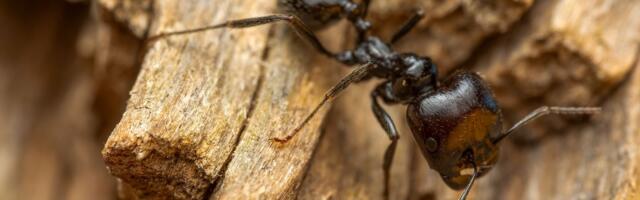
How Ophiocordyceps unilateralis takes over a carpenter ant's body, steers it to a leaf vein 25 centimetres above the forest floor, and grows a spore stalk out of its head — and the newly discovered Bornean fungus that preys on it in turn. Read more ›
0

Uber has agreed to acquire Berlin-based Delivery Hero in a $14.8 billion deal that would extend the combined platform to 99 markets and consolidate the world's largest food delivery business outside China. Read more ›
0
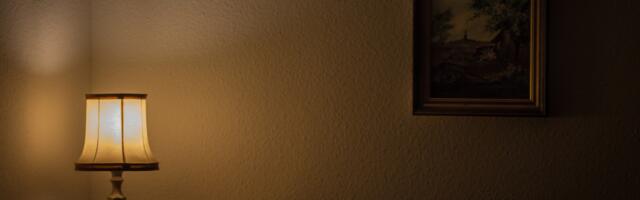
For some adults, the lamp left burning in the hallway isn't about fear of the dark — it's a signal inherited from a childhood where a lit window meant a parent was still out there, still on their way back. Read more ›
0

I’ve been apartment hunting since April. The original plan, which I’m mildly embarrassed to admit out loud, was to have a place secured by my 27th birthday — as though the rental market, an entity with roughly the emotional warmth of a spreadsheet, was going to respect a deadline I invented purely for narrative satisfaction. ... Read more Read more ›
0

The decision to leave a relationship gets made in the prefrontal cortex, but the routines built around another person live in the striatum — and those circuits keep firing on cue for weeks after the person is gone. Read more ›
0

There is the pain a person lives through, and then there is the pain their memory files away for later. The unsettling part of the classic cold-water experiment is that those two versions of an experience do not always agree. In the study, published in Psychological Science in 1993 by Daniel Kahneman, Barbara Fredrickson, Charles ... Read more Read more ›
0

Brussels’ preliminary finding could eventually cost Meta up to 6% of its global revenue. But Meta gets to argue back first, and nothing has been decided yet. Read more ›
0

Researchers tracked 105 people six times a day for a week. About two-thirds of what they did was triggered by habit, and nearly nine in ten actions were carried out on autopilot. The surprise wasn't the size of the autopilot — it was how often the automatic thing and the intended thing turned out to be the same. Read more ›
0

A cybersecurity firm built by former employees of the Dutch intelligence services raised €60 million to sell “sovereign” European security — but part of the money behind it is American, a useful reminder of what the label does and does not mean. Read more ›
0
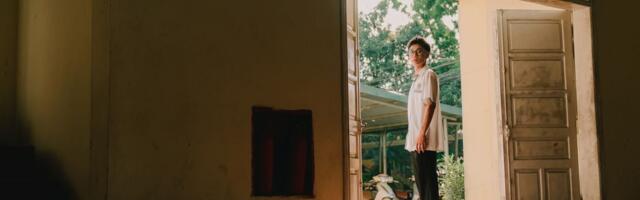
The 'doorway effect' says crossing a threshold makes you forget, because the brain files experience into events and a boundary closes one off. It's a real finding, though a 2021 replication suggests it is smaller and more load-dependent than the popular version. Read more ›
0

In late 1971, Ray Tomlinson wheeled his chair between two PDP-10 mainframes at BBN in Cambridge and sent the first message between computers on ARPANET, choosing the @ symbol because no one's name would ever contain it. Read more ›
0
Most popular sources
 ScienceDaily
|
0% |
 Tech Wire Asia
|
0% |
 ReadWrite
|
0% |
 Sifted
|
0% |
 UK Tech News
|
0% |
| View sources » | |
LIKE us on Facebook so you won't miss the most important news of the day!
24.07.2026 23:36
Last update: 23:10 EDT.
News rating updated: 06:30.
What is Times42?
Times42 brings you the most popular news from tech news portals in real-time chart.
Read about us in FAQ section.